
You say what you want.
In the chat or as a ticket on the board. One sentence will do. A badly phrased one, too.
Introducing PlainBoard
A team of AI agents that builds your software. You only talk to its manager. Your friends do too. And it all lands on main.
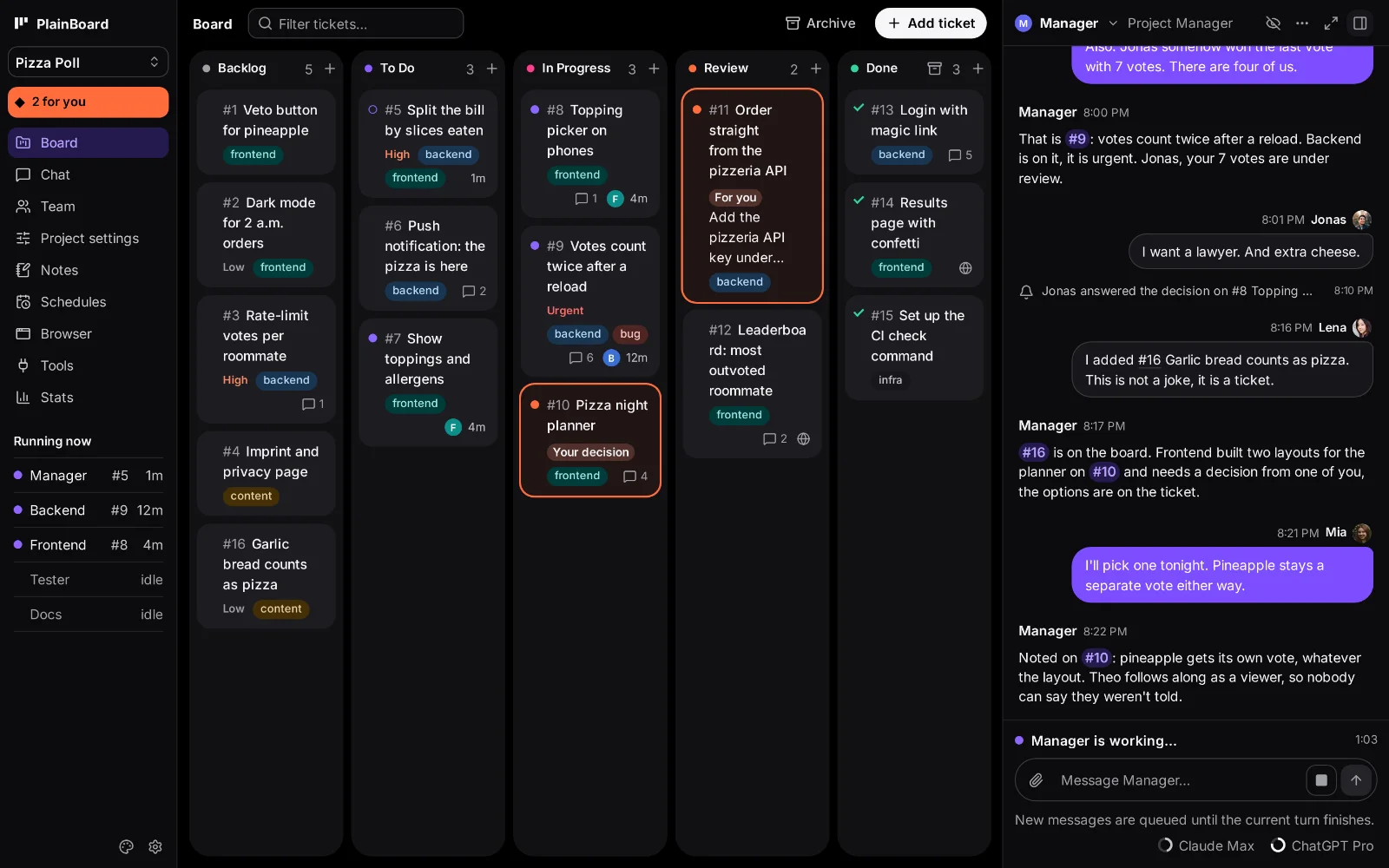
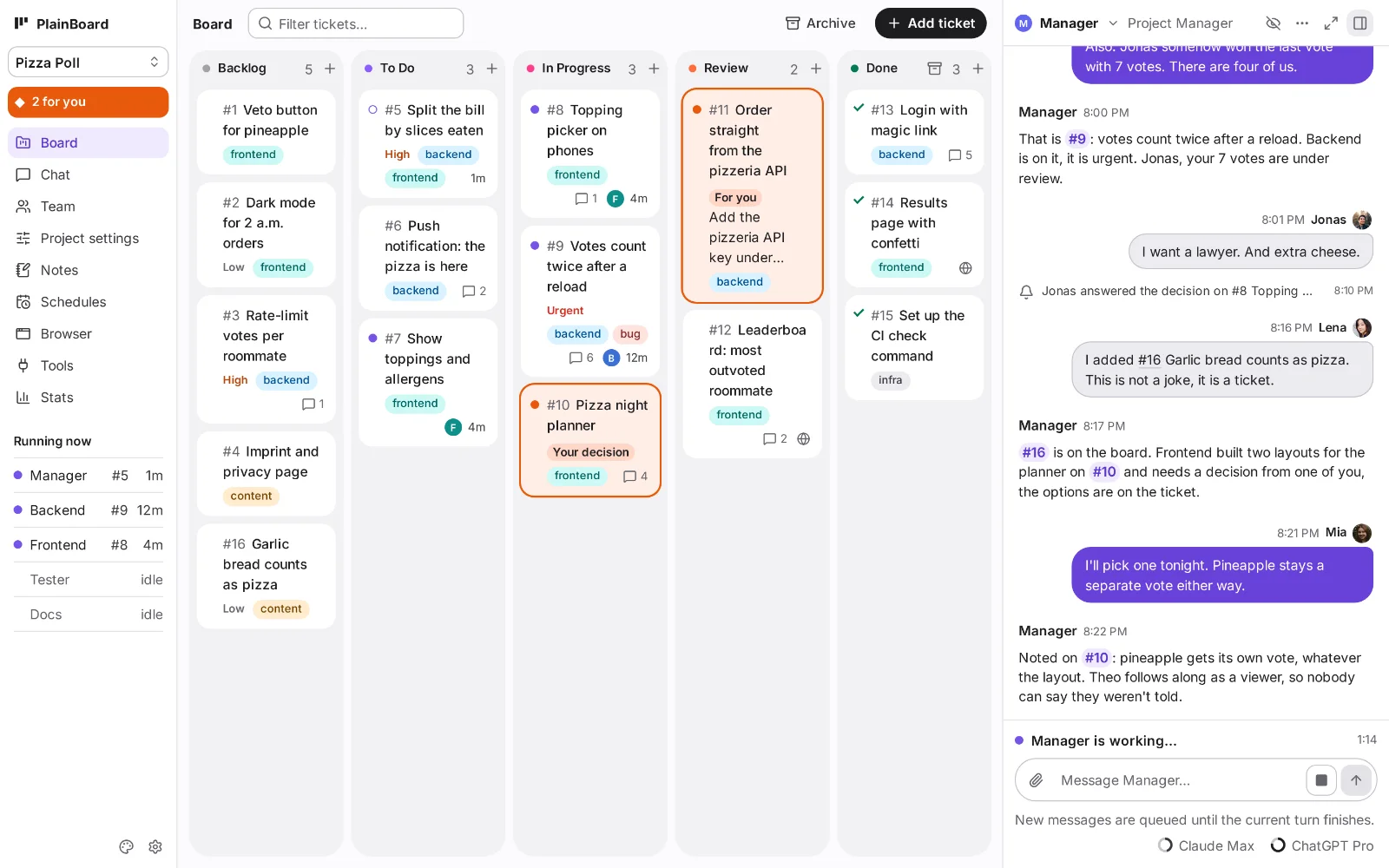
— Us, on a stage we don’t have. Please imagine the applause.“This is the most advanced slop we have ever shipped. And we think you’re going to love it.”
You never assign a ticket, write a prompt for an agent or merge a branch. Ever again. (Okay, you can. You just don’t have to.)
In the chat or as a ticket on the board. One sentence will do. A badly phrased one, too.
It writes the tickets, builds the team and gives each piece of work to exactly one agent, as a complete assignment.
Finished branches are merged into one train and checked once. Whatever passes goes into main.
One file, docker compose up -d, and it runs. No config files to edit: PlainBoard asks a few short questions in the browser, each with a recommendation.
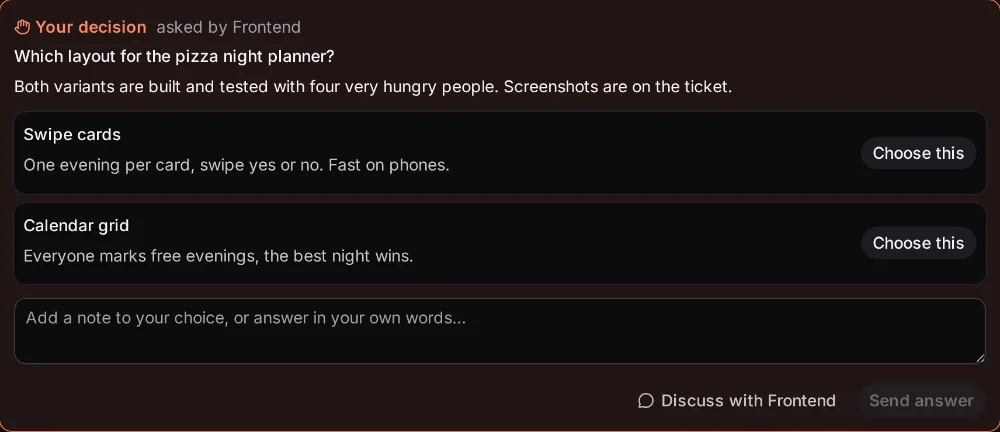
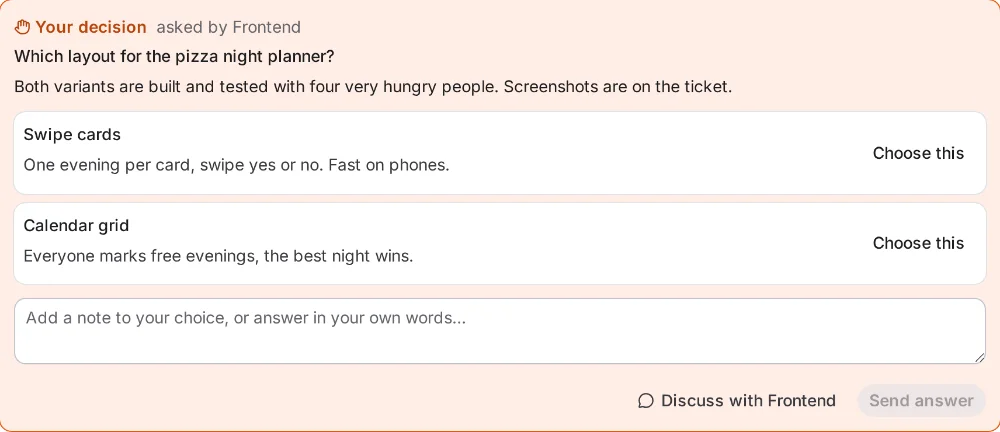
A question for you shows up on its ticket, with options to click and pictures to compare. Meanwhile, the team gets on with everything else.
PlainBoard merges finished branches into one train, checks it once and lands what passes. If a check fails, one agent makes the branches pass together.
No agent sits in a test run or polls a pipeline: PlainBoard does the waiting, without a model. Every ticket starts with a fresh, small context.
A container with a shell, sudo and the network, so they can really build and test. PlainBoard, its database and your secrets stay outside, out of reach. Secrets are encrypted at rest.
Shared notes, each agent’s own notes, and tickets that know what was done, decided, tried and dropped. After a restart, the work picks up where it stopped.
Claude and Codex side by side, on API keys or your subscriptions. Or on a model server of your own.
One PlainBoard, your projects, a whole crew of agents – and all of you talk to the same manager. Like a group chat, except software comes out the other end.
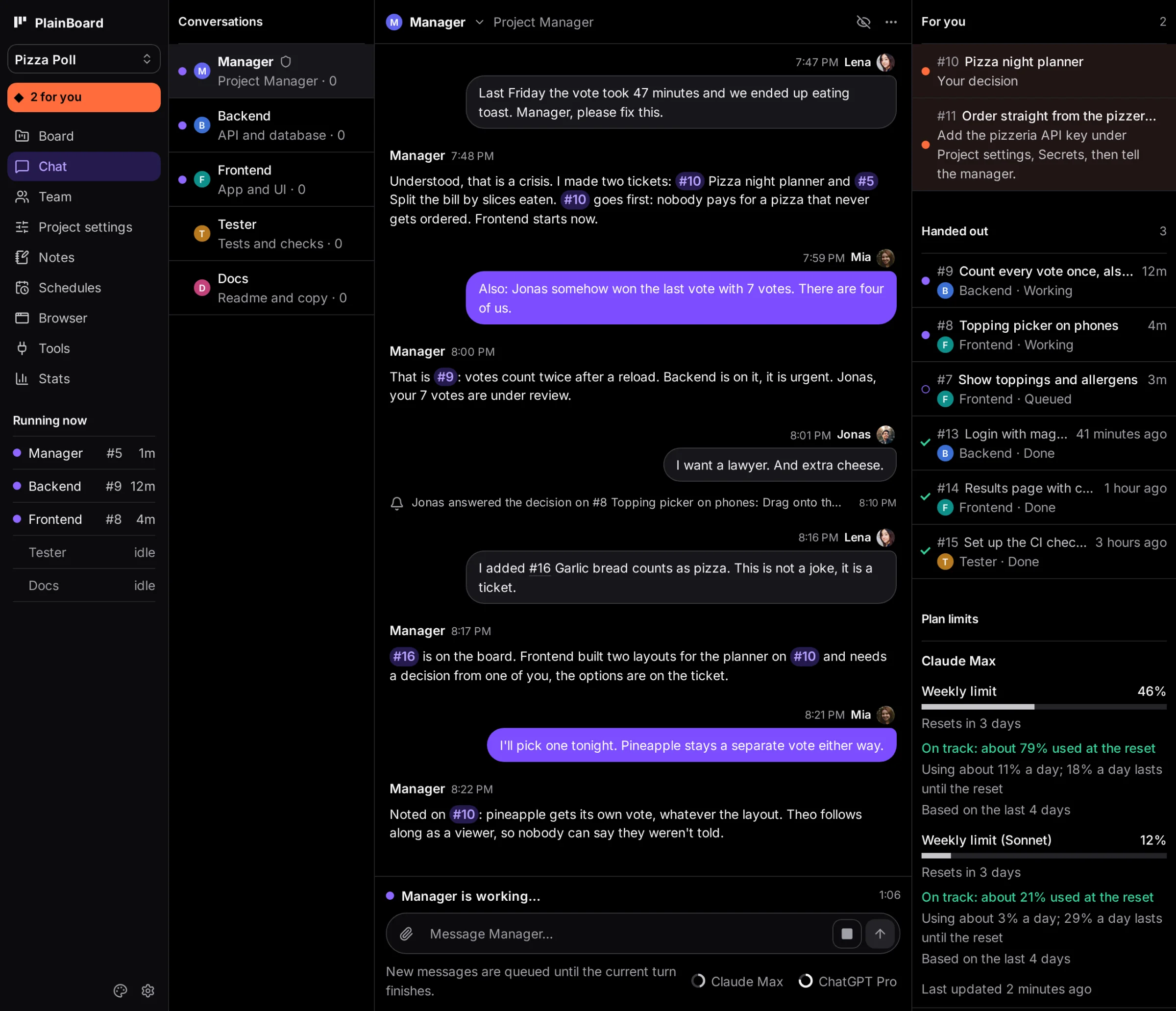
 Theo
Reads everything in the project: board, chats, team, notes, statistics. Perfect for the friend who’s “just looking”.

 Jonas & Lena
Also works in it: tickets, chats with the agents, the team, notes, schedules.
 Mia
Also gets the settings, repositories, secrets, MCP servers, public API keys and members. Can delete the project, too. With great power …
Put PlainBoard on a server behind a reverse proxy with TLS, then add people under PlainBoard settings → People. Done.
Agents post a link to the page they started, and the Browser view shows it the way the agent sees it.
The public API puts your project’s progress on your website. Bragging has never been this verifiable.
Oh, and one more thing …
You need Docker. That’s it. In an empty folder:
Open source, MIT licensed. You pay your model provider directly – PlainBoard makes exactly nothing off you. We find that slightly unhinged, too.
curl -o docker-compose.yml \
https://raw.githubusercontent.com/hthoene/plainboard/main/deploy/docker-compose.ymldocker compose up -ddocker compose pull
docker compose up -dNo waitlist, no pre-order, no keynote-exclusive colour. Just a repository, a license and your friends.